By Florin Păun, Dr.Ing in Aerospace and Economist,
CSO of ARESIA, founder of Xvaluator & Agilising Innovation, member of the EIC Jury Pilot
From the theory of multiple asymmetries and the DRL–TRL scale to eight regional technology transfer accelerators centres, an Inventor’s Statute and national programmes able to reshape Romanian talent and potential into intellectual property, production and economic power.
Romania is losing the value between the laboratory and the factory
Romania has high-performing researchers, highly skilled engineers, capable entrepreneurs and a scientific diaspora willing to contribute. Yet these resources operate in isolation, with no architecture to bring them together into a coherent economic process. Research results end up in scientific journals, sometimes in patents, but far more rarely in licences, industrial products and companies strong enough to change the structure of the national economy.
The bottleneck lies in the way Romania evaluates, funds, exploits and taxes innovation. Researchers are rewarded mainly for publications, universities earn too little from commercialising intellectual property, and a company that takes on an insufficiently mature technology assumes a risk that can threaten its very survival. Public funders count projects, expenditure and administrative indicators, while the economy is waiting for products, licences, industrial capacity and market access.
My experience at ONERA led me to discover and compensate what I have called multiple asymmetries. Joseph Stiglitz explained the effects of information asymmetry on economic transactions, but technology transfer exposes other fault lines, created by the differences between actors who are obliged to work together.
Technological asymmetry arises because laboratories work at low levels of maturity, while most SMEs sell products and need solutions that are close to manufacturing. Risk asymmetry means that the same failure represents a fraction of a laboratory’s budget but, for a company, the loss of an investment that could shut it down. Cultural asymmetry separates the researcher, focused on publications and recognition from the academic community, from the entrepreneur under pressure from orders, payroll and competition. On top of these come asymmetries of time and interest: the state, the researcher, the investor and the company pursue different outcomes and operate on timelines that rarely coincide.
More money distributed through the same procedures will simply reproduce the same bottlenecks. Reform must begin with an institutional diagnosis of these asymmetries, followed by contracts, incentives and organisations capable of offsetting them.
Researchers must share in the value of their inventions
In my view, the first change Romania needs now concerns how scientific careers are evaluated. In fields with economic potential, researchers should be encouraged to protect an invention before publishing it, and in professional assessments a licence should carry more weight than a patent, just as a patent should count for more than an article with no economic competitive advantage concern for national industries.
Applying this principle at ONERA raised the number of licences from zero to around fifteen a year. The result was sustained by giving inventors a share of the revenue generated. The CNRS pays researchers half of the royalties remaining after protection and commercialisation costs are deducted, while ONERA grants them 25% with no such deductions. Researchers thus acquire a legitimate interest in the economic journey of their invention, while the institutions/laboratories begins to manage intellectual property as an asset.
Romania could adopt an Inventor’s Statute for universities and research institutes, with incentivating standard rules on intellectual property, royalty sharing and researchers’ participation in companies built around their own technologies. Universities could convert their share of royalties into equity in newly created companies, maintaining a lasting economic stake in the value born in their laboratories.
Eight regional technology transfer companies
Technology transfer cannot remain a peripheral task assigned to administrative offices with no commercial expertise. Romania needs eight regional technology transfer acceleration companies, organised at the level of the development regions, where a critical mass of laboratories, companies, investors and specialists can support professional teams.
The experience of France’s fourteen SATTs shows that such organisations become viable when their work starts primarily from the needs of industry and SMEs. They identify problems for which research can build solutions and, to a lesser extent, pursue inventions emerging from laboratories for which markets still have to be found.
Technology transfer specialists could be paid partly according to the royalties, investment and contracts they generate. Their performance would be measured in licences, capital raised, companies created, technologies brought into production and economic value retained in the region. The first teams could be trained in about six months and reach operational efficiency within 18 to 24 months.
A mature technology is worth little without mature demand
The Technology Readiness Level scale measures how mature a technology is, but says too little about how mature the demand for it is. To fill this gap, I developed the Demand Readiness Level, a tool that tracks the path from the perception of a need to the emergence of a market ready to buy the technological response.
The DRL–TRL diagram sets technology maturity against demand maturity. An analysis of ONERA’s licences showed that a technology transfer has a solid chance of success when the sum of the two levels reaches at least nine.
An early-stage technology can attract capital if it responds to a well-defined demand, just as an advanced invention can be abandoned if the market has been ignored.
Applying this tool would change how projects are selected for funding in Romania. Scientific quality would be linked to industrial need, entrepreneurial capacity and commercial prospects, and public money would go to projects capable of covering the entire journey from laboratory to production.
The state must share the risk
The state must impose rules for sharing both risks and benefits. Public investment involving large industrial groups should be granted only as an incentive to consortia that have committed to working together in this spirit.
A shared risk-and-benefit contract provides a mechanism through which the laboratory, the company, the investor and the state each take on a proportional share of the risk and then divide the benefits according to their respective contributions. Subsidies thereby come with economic obligations, deadlines and measurable results.
For large industrial groups, public support could be conditional on involving local laboratories and SMEs, on fair rules for intellectual property co-ownership and on manufacturing the results in Romanian plants. Failure to meet these obligations would trigger recovery of the funding. The state would thus invest in building Romanian industrial capacity, rather than funding research whose results are later produced and exploited in other countries.
The Investment and Development Bank could take equity stakes in technology projects, supported by experts trained to assess seed and Series A investments. Romanians who have served as evaluators for the European Innovation Council could form the core of such expertise and train specialists for each region.
Tax relief on private investment in research, combined with an enhanced tax credit for collaborations between companies and public laboratories, would mobilise private capital. Public procurement should become accessible to innovative companies, and major foreign contracts, particularly in defence, should include firm obligations on offsets, technology transfer and local production.
Romania needs programme directors, not yet another strategy
Romania manages thousands of projects but runs too few national programmes from research through to market. Economic reconstruction requires programme directors with multi-year mandates, budgets, technical expertise and accountability for the entire pathway, from defining a strategic need to industrialising the solution.
An Interministerial Programmes Directorate could coordinate a focused portfolio of investments in energy, storage, hydrogen, advanced materials, artificial intelligence, robotics, biotechnology, cybersecurity and dual-use civil and military technologies. Each programme would bring together ministries, research, industry, funders and the diaspora expertise under a single leadership, reducing budget fragmentation and diffusion of accountability.
Two avenues would build on advantages Romania already clearly possesses. The first is the production of decarbonised hydrogen through pyrolysis of natural gas extracted from the Black Sea, and the development of sustainable aviation fuels, a field in which Romania can link its energy resources with research, industry and European demand.
The second is the construction at Cape Midia of a multimodal training base for NATO forces, connected to the Romanian defence industry, aerospace research and European simulation, evaluation and targeting technologies. The project could be complemented by an agency dedicated to human factors and the human–machine interface, bringing together computer scientists, engineers, psychologists, sociologists, designers and military personnel from operational forces, as a modern continuation of the intellectual legacy of Ștefan Odobleja.
The same map could include large-scale energy storage systems, advanced battery recycling and qualifying artificial intelligence, designed to reduce false information and the energy footprint of digital tools.
The diaspora must be brought into programme leadership
Romania’s scientific diaspora retains access to technologies, laboratories, companies and funding networks that the Romanian state is building only slowly. Many specialists have submitted proposals and offered to contribute on a voluntary basis, but their energy is often spent on conferences, ceremonial meetings and advisory groups with no budget and no decision-making power.
Each national programme could have a diaspora technology X market council reporting directly to its director. These specialists would take part in selecting technologies, assessing partners, negotiating transfers and opening up foreign markets. The diaspora would thus become an active knowledge infrastructure, integrated into the country’s economic architecture.
Romania’s reconstruction begins at the point where the researcher earns from the licence, the university shares in the value of the company created, the company shares its risk with the state, the investor receives a tax incentive, and the programme director is accountable for moving the technology from laboratories to factories and markets. Romanian talent is already producing ideas. The mechanism that keeps their value in Romania can be built.
Ten decisions for a Romania that capitalises on its talent
- Adopt an Inventor’s Statute with clear rules on intellectual property and royalty distribution.
- Make licences, patents and economic impact major criteria in evaluating researchers.
- Create eight professional regional technology transfer acceleration companies.
- Pay technology transfer specialists partly according to the economic value they generate.
- Introduce a research & development tax credit, enhanced for collaborations between companies and public laboratories.
- Provide equity financing for early-stage technologies through the Investment and Development Bank.
- Use shared risk-and-benefit contracts in publicly funded projects.
- Make aid to large companies conditional on involving Romanian SMEs, technology transfer and local production.
- Establish an Interministerial Programmes Directorate and appoint programme directors with a mandate, budget and accountability.
- Bring diaspora specialists into the technological leadership and evaluation of national programmes.
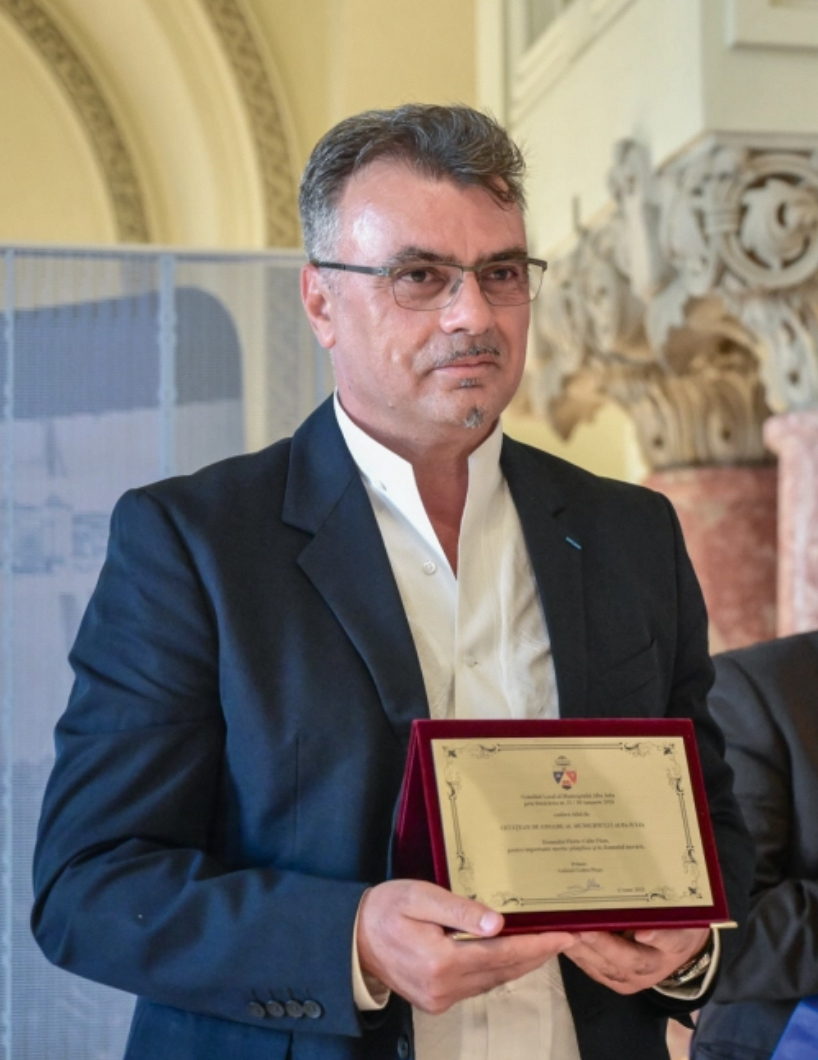
Florin Păun belongs to that rare category of Romanian specialists who have known research from inside the laboratory, industry through major technology programmes, and innovation policy at the point where it produces licences, investment and industrial capacity. An aerospace engineer trained at the Politehnica University of Bucharest, École Polytechnique, ISAE Toulouse and MIT Sloan, he spent nearly two decades at ONERA, the French National Aerospace Research Office, where he led technology transfer to industry, IP activity as well parteneurial R&D with industry. He is currently Chief Science & Partnership Officer at ARESIA, an expert and jury member for the European Innovation Council, and founder of the deeptech company Xvaluator.
He has been involved in more than five hundred technology transfer contracts and processes, working with researchers, start-ups, SMEs, major industrial groups and public authorities in France, the United States, Indonesia, Bulgaria, Cyprus, the Republic of Moldova and Romania. His contributions include the Demand Readiness Level scale, which complements the TRL system created by NASA, the multiple-asymmetries diagnosis, the shared risk-and-benefit contract and the Păun–O’Neal protocol for accelerating innovation.
France made him a Knight of the National Order of Merit for his contribution to its innovation strategies and tools, and in 2026 he received the „Henri Coandă” Prize, awarded by the National Grand Lodge of Romania and the Romanian Academy for his research and inventions related to hydrogen. Born in Alba Iulia and now an honorary citizen of the city, he launched the Alba Iulia Innovation Call, a charter proposing that Romanian institutions gain access to the innovation tools developed and tested over his international career.
Florin Păun’s views matter because they come neither from contemplating statistics nor from administering programmes with no economic impact, but from direct experience in turning research into contracts, patents, licences, companies and jobs.