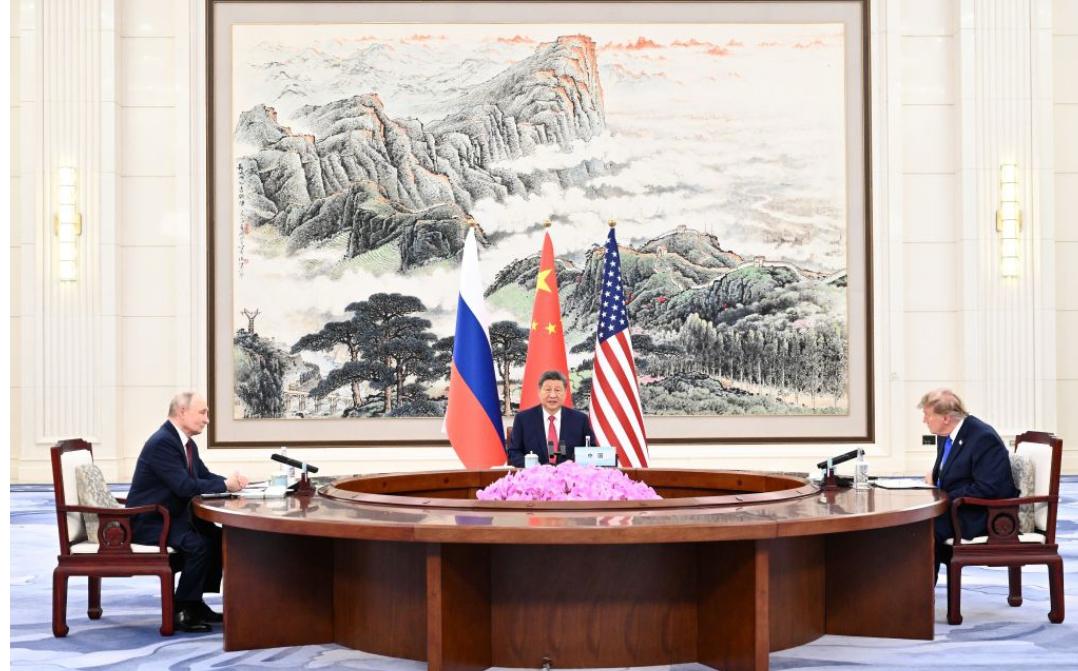
The photograph of the three leaders says more than many of the official statements that preceded the meeting in Shenzhen. Xi Jinping, Donald Trump and Vladimir Putin, three men representing powers with different, and sometimes conflicting, interests, stand together in the same frame. Yet behind the protocol gestures and diplomatic smiles lies a far more complicated reality: the world is going through a period in which the old mechanisms of international balance are under considerable pressure, while the new rules have yet to be established.
This is no ordinary meeting. It is an unprecedented trilateral gathering at the highest level, bringing together the leaders of China, the United States and Russia. The fact that this meeting took place on 19 November 2026, in Shenzhen, on the sidelines of the APEC summit, is in itself an important political and diplomatic signal.
But to understand what happened in Shenzhen, we must look at the event from three different perspectives: Beijing, Moscow and Washington. Each of these capitals has its own vision of international affairs, its own objectives and, above all, its own interests when it comes to the future of the global economy.
In my view, the real stakes of this meeting should not be sought exclusively in statements on security or in possible diplomatic concessions. We must look further, towards the global economy, resources, energy, technology, finance and each country’s ability to influence the rules that will govern the world over the coming decades.
BEIJING: CHINA IS AN INDUSTRIAL POWER, AND IT IS CLEAR TO THE WORLD THAT IT WILL HELP WRITE THE RULES OF THE GLOBAL ECONOMY
In Beijing’s diplomatic strategy, China is not merely claiming a seat at the table where major international decisions are made. It seeks to play a decisive role in shaping the rules governing the global economy, trade, technology, finance and international security. We must acknowledge that China has strengthened its position as an indispensable actor in major international economic decisions.
I believe it is important to understand China’s transformation correctly. Years ago, we spoke of an economy competing primarily through low production costs and exports. Today, we are talking about a country that has built, within just a few decades, one of the world’s most important industrial, technological and commercial ecosystems.
China has impressive industrial capacity, infrastructure developed on an enormous scale, a key position in global supply chains and an increasingly strong presence in sectors such as electric mobility, batteries, renewable energy, robotics, telecommunications and artificial intelligence.
Moreover, China is no longer simply a producer for the rest of the world. It is also an enormous consumer market, an international investor and an actor actively involved in financing and developing infrastructure across numerous regions of the globe.
This transformation gives Beijing an economic position that no serious analysis of the world’s future can afford to ignore.
At the APEC meeting in Shenzhen, Xi Jinping conveyed a message focused on economic cooperation, connectivity, technological innovation and sustainable development. He emphasised digital infrastructure, artificial intelligence, energy and food security, and stronger economic cooperation across the Asia-Pacific region.
This direction must be viewed in the context of China’s broader economic strategy: domestic development, the expansion of trade relations and an enhanced role for China in international economic mechanisms.
In its relationship with the United States, Xi Jinping faces a major challenge. The two economies are deeply interconnected, yet they are also engaged in technological and trade competition that can influence the entire global economy.
Trade, semiconductors, artificial intelligence, market access, investment and control over strategic technologies are issues that cannot be resolved through diplomatic statements alone.
I believe Beijing fully understands that economic development cannot be separated from the stability of international relations. China needs markets, access to resources, investment and predictability.
At the same time, its relationship with Russia provides access to energy resources and an important framework for strategic cooperation across Eurasia.
There is, however, a delicate balance to maintain: China must manage its partnership with Moscow while preserving its extremely important economic relationship with Washington.
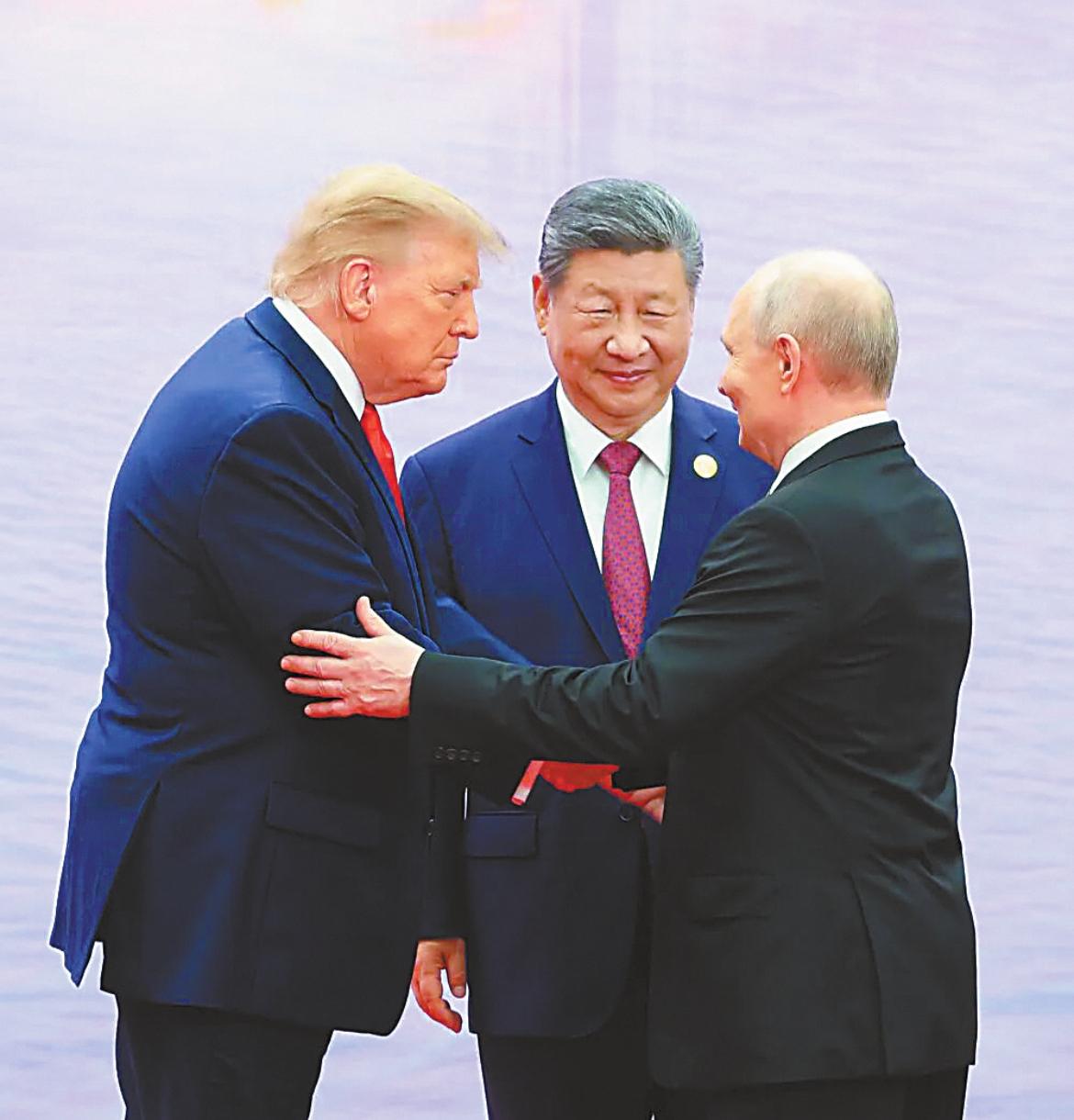
This is one of the most interesting dimensions of Chinese foreign policy. Beijing seeks to strengthen its relationship with Moscow while, at the same time, benefiting from the economic opportunities offered by its relationship with the United States. In fact, this is one of the definitions of diplomacy: maintaining relations with all partners, negotiating with each of them and pursuing, above all, the interests of one’s own country and its citizens, without disregarding the legitimate interests of others.
China also faces its own economic challenges: demographic trends, the property market, the need to rebalance domestic consumption and the challenge of maintaining sustainable economic growth.
But these challenges do not change the fundamental reality: China is one of the world’s leading economic powers and an actor without which major projects involving infrastructure, energy, technology and international trade cannot be developed.
I do not believe the future of the global economy can be discussed today without China, nor should China’s development automatically be viewed as a threat to other economies.
Competition can generate progress, investment and innovation. The problem arises when economic competition turns into confrontation that undermines everyone’s stability.
Through the economic power it has built, China has strengthened its ability to decisively influence the rules of the global economy.
There is also an important diplomatic dimension to this gathering. By hosting the meeting in Shenzhen, China demonstrated that it can provide a framework for dialogue between two powers with which it has different relationships and interests. Beijing did not automatically secure Washington’s or Moscow’s agreement with its own objectives, but it strengthened its position as a diplomatic centre capable of facilitating dialogue between the world’s major powers.
MOSCOW: RUSSIA IS DEFENDING ITS STATUS AS A GREAT POWER AND ITS STRATEGIC ROLE IN THE GLOBAL ECONOMY
For Russia, this meeting carries significance that goes beyond the official agenda.
After years of economic sanctions, confrontation with the West and war in Ukraine, Vladimir Putin is taking part in a direct meeting with the leaders of the United States and China.
For Moscow, this is a demonstration that Russia remains an important actor in the international architecture.
I believe Russia must be analysed beyond the conflict in Ukraine. It is a country with considerable natural resources, significant energy capacity, mineral, agricultural and industrial resources, and a strategic geographical position between Europe and Asia.
In a world where energy security has once again become a fundamental concern, Russia’s resources continue to carry major economic importance.
Energy, natural gas, oil, raw materials and transport infrastructure are all factors capable of influencing the international economic balance.
Russia also possesses military and nuclear capabilities that give it a major role in discussions on global security.
In his statements in Shenzhen, Vladimir Putin emphasised the shared responsibility of the three countries for maintaining international peace and security. He also addressed global and regional economic relations, food and energy security, and the need to find solutions to international conflicts.
Putin also invoked the historical role of the three countries in founding the United Nations, arguing that they have a responsibility to preserve and strengthen the international legal system built around the UN Charter.
This message must be viewed in the context of Moscow’s interests.
Putin seeks to preserve Russia’s status as a great power, reduce its economic isolation and secure a negotiating framework in which its security interests are taken into account.
The relationship with China is particularly important. Moscow possesses energy and mineral resources, while Beijing has enormous industrial, technological and commercial capabilities.
Cooperation between the two countries can contribute to the development of significant economic flows across Eurasia.
There is, however, a reality that must not be ignored: the economic gap between China and Russia is considerable, and Moscow’s growing trade dependence on Beijing could gradually alter the balance of negotiating power between the two partners.
The economic and strategic relationship with China is becoming increasingly important for Russia.
In its relationship with the United States, the central issue remains international security, particularly the conflict in Ukraine and nuclear arms control.
We cannot speak of a stable global security architecture without functional dialogue between Washington and Moscow.
At the same time, any discussion about the future of European security must take into account the sovereignty of states, international law and the legitimate interests of European countries.
Russia’s participation in this meeting does not automatically mean that conflicts will be resolved or sanctions lifted. It does, however, demonstrate that dialogue between major powers remains necessary, even when political differences are profound.
Russia wants to remain a centre of power in a world where energy, natural resources and security continue to be fundamental elements of international influence.
Nevertheless, Russia’s status as a strategic great power should not be confused with economic and technological capabilities comparable to those of China or the United States. The pressure of economic sanctions, limited access to certain advanced technologies and differences in industrial development all point to a reality in which Moscow retains considerable influence through its natural resources and military and energy capabilities, but operates on a different economic and technological foundation from the other two actors.
WASHINGTON: THE UNITED STATES WANTS TO MAINTAIN ITS GLOBAL ROLE, BUT UNDERSTANDS THAT NEGOTIATION IS BECOMING INEVITABLE
For the United States, the Shenzhen meeting represents an opportunity to engage directly with the other two major powers on issues capable of influencing the security and economy of the entire world.
America remains a fundamental centre of the global economy. The US dollar, financial markets, innovation capacity, technology companies, universities, research infrastructure and institutional influence provide it with significant economic and strategic advantages.
The United States has built an international financial system in which the dollar continues to occupy a central position. American markets remain a benchmark for international investment, while US companies operate in some of the most important technological sectors of the future.
Donald Trump seeks concrete and visible results, relying on direct negotiations, personal dialogue with international leaders and the identification of agreements that strengthen the position of the United States.
This is an approach in which economic and commercial interests occupy a central place.
In its relationship with China, Washington seeks favourable trade conditions, access to markets for American companies and the protection of its technological advantages.
In its relationship with Russia, the priority is reducing security risks, controlling nuclear weapons and managing international conflicts.
In Shenzhen, Trump raised the issue of the responsibility of the three major nuclear powers to reduce security risks and prevent nuclear conflict.
This is a particularly important issue following the expiration of the New START Treaty between the United States and Russia in February 2026.
The idea of nuclear dialogue that also includes China makes strategic sense, although negotiations will be difficult. Beijing has a smaller nuclear arsenal than those of the United States and Russia and does not necessarily have the same interest in accepting comparable limitations.
From my perspective, Washington needs a functional relationship with Beijing and ongoing dialogue with Moscow, even if the differences between these countries are significant.
The United States can defend its strategic interests while also contributing to the development of cooperation mechanisms with the other major powers.
There are shared interests that must be managed: energy security, financial stability, international trade, the prevention of nuclear proliferation and the security of trade routes.
Donald Trump can open doors and create opportunities for negotiations. Turning these opportunities into lasting agreements, however, depends on each country’s ability to accept compromises and honour its commitments.
The United States seeks to preserve its role as a global leader, but the future of that role will also depend on Washington’s ability to build functional relationships with the other centres of power.
WHAT DID THE THREE LEADERS ACTUALLY AGREE ON IN SHENZHEN?
Beyond the political image of the meeting, I believe we must focus on the concrete outcomes.
The first concerns reform of the United Nations. The three countries, all permanent members of the Security Council, agreed on the need for reform that would enable the organisation to respond more effectively to global challenges and fulfil its mission of maintaining international peace and security.
This is an important issue because international institutions need to better reflect the realities of the contemporary world.
The second area concerns energy security. The three countries expressed their intention to increase the production and supply of refined petroleum products and reaffirmed the importance of maintaining stable energy flows.
This commitment has significant economic implications. Energy affects industry, transport, inflation, corporate competitiveness and people’s living standards.
The third area concerns state sovereignty and the immunity of state officials. The declaration emphasises the importance of state consent and the need to ensure that the jurisdiction of the International Criminal Court and similar bodies is not exercised abusively.
This is a sensitive issue that must be viewed through the relationship between state sovereignty and international accountability.
The fourth area concerns reducing nuclear risks and preventing the proliferation of nuclear weapons.
The three leaders reaffirmed the principle that a nuclear war cannot be won and must never be fought, and agreed to engage in dialogue on reducing nuclear risks.
These are the four areas publicly endorsed by the leaders.
It is important, however, to make a distinction: there is not yet a concrete agreement on the actual reduction of nuclear arsenals, no implementation timetable and no joint solution announced for the conflict in Ukraine or the situation in Iran.
I believe this distinction between political statements and actual commitments must be maintained in any serious analysis.
The meeting is important, but its true value will be determined by what happens after Shenzhen.
There is, however, a reality that must be recognised beyond the historic image of the meeting. The three powers managed to adopt a joint declaration, but they did not announce a common solution to the conflict in Ukraine or the situation in Iran. They discussed security issues and identified several areas for cooperation, but significant strategic differences between the three countries remain.
Therefore, Shenzhen does not yet represent the beginning of a new international architecture agreed upon in every detail. Rather, it signals that the major powers consider direct dialogue necessary on issues capable of shaping the future of the world.
THE ECONOMY IS THE REAL STAKE. WHO WILL CONTROL THE RESOURCES, TECHNOLOGY AND CAPITAL OF THE FUTURE?
Beyond Ukraine, Iran, nuclear weapons and security, there is one issue that connects all three powers: control over future global economic flows.
Who will have access to energy?
Who will control essential technologies?
Who will establish the rules of international trade?
Who will have the capacity to finance major infrastructure projects?
How will international monetary and financial systems evolve?
What role will the dollar, the yuan and other currencies play in future trade flows?
Who will control supply chains for semiconductors, batteries, digital infrastructure and artificial intelligence?
These are the questions that will define the coming decades.
China has industrial strength, production capacity and an increasingly consolidated global commercial influence. The United States holds a dominant position in technology, financial markets and global economic infrastructure. Russia possesses important energy and mineral resources, strategic capabilities and a vital geographical position.
None of these three powers can achieve everything it wants without taking the others into account.
There is, however, another element that I consider essential: the future of the global economy will not be determined exclusively by who produces more or who possesses the largest resources. It will also depend on who succeeds in attracting capital, financing development, creating technologies and building stable economic systems.
Infrastructure financing, energy investment, transport network development, digitalisation, cybersecurity and artificial intelligence will be areas in which competition between major powers becomes increasingly visible.
In this context, international financial systems will play a fundamental role. The ability to finance large-scale projects, manage risks and ensure investment predictability will matter just as much as natural resources or industrial capacity.
The new world order will not be the result of a single meeting, nor will it be created exclusively through agreements between three major powers. It will take shape over time, through negotiations, economic competition, international cooperation and the ability of states to identify common interests.
China, the United States and Russia have important responsibilities in maintaining international stability, but the future of the world does not belong exclusively to these three countries. Europe, emerging economies and other states must also play a role in shaping international cooperation mechanisms.
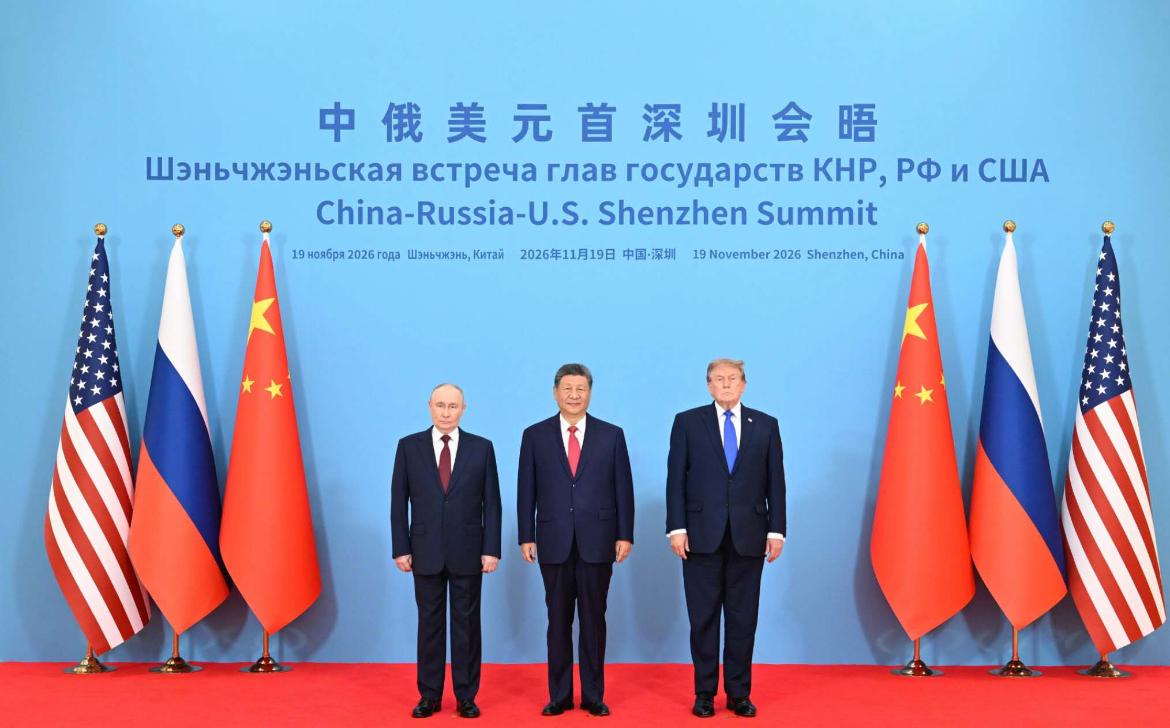
The Shenzhen meeting does not yet establish the rules of a new world order. It does, however, demonstrate that direct dialogue between major powers remains indispensable at a time when economic, technological, energy and security interests are becoming increasingly interconnected.
In my view, the real challenge of the coming decades will not be determining which major power will dominate the world, but whether these powers will succeed in building mechanisms through which competition does not undermine cooperation and economic development is not sacrificed in favour of confrontation.
Because international stability cannot be built against the interests of others. It can only be achieved through a negotiated balance based on mutual respect, responsibility and rules that apply to everyone.
The new world order will not be born out of a photograph. But the photograph from Shenzhen shows us very clearly who is claiming the right to take part in shaping it.
Romania must find a way to engage with all three centres of power, maintain constructive diplomatic relations and promote its own economic and strategic interests.